
Video compression technology improves constantly. The technology industry created the AV1 video codec to make 4K video streaming faster. Now, engineers are developing the next generation of video compression. This new generation is called the AV2 video codec. Many buyers want to know if new televisions support AV2 technology. This article explains the current status of AV2 video decoding. We will also explain how video codecs affect IPTV performance and live sports streaming.
Quick Answer
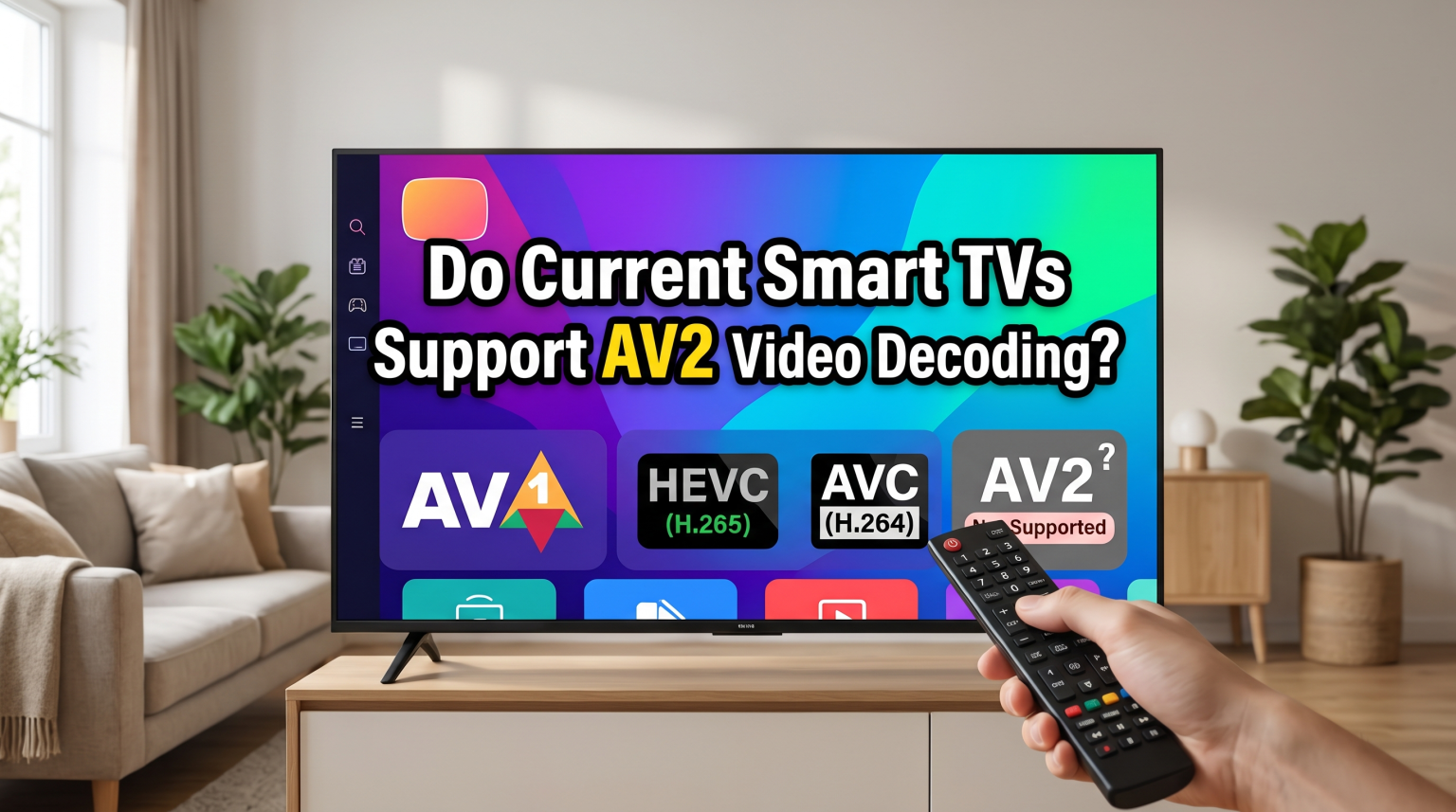
Currently, consumer Smart TVs do not support AV2 video decoding. The AV2 codec remains in the development stage. Television manufacturers like Samsung, Sony, and LG currently include hardware decoding for the AV1, HEVC (H.265), and AVC (H.264) codecs. AV2 decoding requires new physical microchips. Therefore, manufacturers cannot add AV2 support to older televisions using software updates. Users who want modern video support should buy Smart TVs with AV1 hardware decoding.
What is the AV2 Video Codec?
The Alliance for Open Media develops video codecs. This group includes large technology companies like Google, Amazon, and Netflix. They previously created the AV1 codec. The AV1 codec compresses video files efficiently. Efficient compression uses less internet bandwidth.
The AV2 codec is the planned successor to the AV1 codec. AV2 will compress video files even more efficiently than AV1. This means streaming services can send 8K video or high-quality 4K video using less internet data. However, finalizing a new video codec takes several years. Engineers must ensure the video quality remains high while reducing the file size. Because the AV2 codec is not finished, no consumer electronics use AV2 technology today.
Hardware Decoding vs. Software Decoding
To understand AV2 supported Smart TVs, we must explain how televisions play video files. Televisions use two methods to decode video: hardware decoding and software decoding.
Hardware decoding uses a specific physical microchip inside the television. This microchip has one job. Its only job is to decode a specific video format. Hardware decoding is fast. Hardware decoding also uses very little electricity.
Software decoding uses the main processor of the television. The main processor must work very hard to decode the video mathematically. Software decoding for complex video codecs causes the television processor to overheat. Software decoding also causes video stuttering and buffering. Therefore, Smart TVs require physical hardware decoding for complex video formats like AV1 and AV2.
Which Video Codecs Do Current Smart TVs Support?
Current Smart TVs support several established video codecs. Almost all Smart TVs support AVC (H.264). AVC is an older codec. AVC is very reliable for standard HD video.
Most modern Smart TVs also support HEVC (H.265). HEVC provides excellent compression for 4K video.
Recent Smart TVs from premium brands also support AV1. AV1 is newer than HEVC and offers better compression. If you want to Best Smart TV OS for IPTV in 2026: Tizen vs Google TV vs webOS, you must also consider this native codec support. The operating system must communicate with the hardware decoder to display the video correctly.
Codec Comparison Summary
| Feature | AVC (H.264) | HEVC (H.265) | AV1 | AV2 |
| Smart TV Support | Yes (All models) | Yes (Most models) | Yes (New models) | No (Not available yet) |
| Best Resolution | 1080p HD | 4K UHD | 4K and 8K UHD | 8K UHD and beyond |
| Hardware Decoding | Yes | Yes | Yes | No |
| Internet Bandwidth Required | High | Medium | Low | Very Low |
Can Software Updates Add AV2 Support?
Many television owners ask if a simple software update can add AV2 support to their current Smart TV. The answer is no. A software update changes the digital operating system. A software update cannot change the physical microchips inside the television.
Because AV2 requires a dedicated physical hardware chip for efficient playback, existing televisions will never support true AV2 hardware decoding. When AV2 becomes a global standard, consumers will need to buy new televisions. Until then, AV1 and HEVC remain the most advanced codecs available for home entertainment.
How Television Brands Handle Video Codecs
Different television manufacturers approach video codecs similarly, but their operating systems handle applications differently.
Samsung Smart TVs (Tizen)
Samsung uses the Tizen operating system. Modern Samsung televisions include hardware decoding for AVC, HEVC, and AV1. Samsung televisions manage video processing very well. However, the Tizen app store has specific limitations for third-party video players.
Sony BRAVIA Smart TVs (Google TV)
Sony uses the Google TV operating system. Google TV is based on Android. Sony BRAVIA televisions also support AVC, HEVC, and AV1 decoding. Because Google TV allows access to the Google Play Store, Sony televisions provide excellent compatibility with many different video player applications.
LG Smart TVs (webOS)
LG uses the webOS operating system. Like Samsung and Sony, modern LG televisions feature hardware decoding for AVC, HEVC, and AV1. LG updates webOS regularly to ensure the internal video players work correctly with these supported codecs.
None of these brands currently manufacture AV2 supported Smart TVs.
Why Video Codecs Matter for IPTV
IPTV services deliver live television channels over the internet. To deliver these channels smoothly, the IPTV provider must compress the video signal. IPTV providers usually use AVC (H.264) or HEVC (H.265) compression. These codecs balance high video quality with low bandwidth requirements.
TV Shadow IPTV requires standard, widely supported codecs to function correctly. This ensures compatibility with almost all devices.
When you use an IPTV player application on your Smart TV, the application uses the television’s hardware decoder. If the IPTV stream uses a video codec that the television does not support, the video will not play correctly. Sometimes, you will hear the audio, but the television screen will remain black. Therefore, having a television with excellent hardware decoding is extremely important for IPTV users.
Do IPTV Applications Support AV2?
Currently, IPTV applications do not support AV2 video decoding. Popular applications like TiviMate, XCIPTV, and Smart IPTV rely on the operating system of the Smart TV. Because current Smart TV operating systems lack AV2 hardware decoders, the IPTV applications cannot play AV2 streams efficiently.
IPTV providers also do not transmit AV2 video. The server hardware required to encode AV2 video live is currently too expensive. In the future, when AV2 hardware becomes common, application developers will update their software. Until then, HEVC and AVC remain the standard technologies for IPTV streaming.
How Video Codecs Affect Live Football Streams
Live football and other fast sports require excellent video processing. The television camera moves quickly across the green field. Fast movement requires a high data bitrate. If the video compression is weak, the football players will look blurry. This visual problem is called compression artifacting.
Efficient codecs like HEVC and AV1 help prevent this blurriness by managing the data better. If you want to 60Hz vs 120Hz TV for Live Football, you should remember that the video codec is equally important. The television must decode the fast movement accurately before the screen can display the image clearly.
Sometimes, users wonder Why Does IPTV Look Blurry on a New 4K TV?. Often, the blurriness happens because the source video uses an older codec with a low bitrate. A newer, more expensive television cannot fix a low-quality source video. The original video signal must be strong.
When Will AV2 Supported Smart TVs Arrive?
Technology experts estimate that consumer Smart TVs will not include AV2 hardware decoding in the near future. The Alliance for Open Media must finish the strict AV2 technical specifications first.
After the specifications are finished, microchip manufacturers must design and test the new hardware decoders. Finally, television brands like Samsung, Sony, and LG must build these new microchips into their retail televisions. This manufacturing process takes several years.
For now, consumers should look for Smart TVs that support AV1 decoding. AV1 provides excellent performance for modern streaming applications and future-proofs the television for the next several years.
Conclusion
The video technology industry is currently developing the AV2 video codec to improve video compression. However, AV2 supported Smart TVs do not exist today. Because AV2 requires new physical hardware decoders, consumers cannot add AV2 support to existing televisions through software updates.
For modern streaming and IPTV usage, consumers should purchase Smart TVs that feature hardware decoding for AV1, HEVC, and AVC. These current codecs provide excellent picture quality for live football, movies, and TV shows. When choosing a television, verify that the operating system supports your preferred IPTV applications and handles current video formats efficiently.
Frequently Asked Questions (FAQ)
Do current Smart TVs support AV2 video decoding?
No. Current Smart TVs do not support AV2 video decoding. The AV2 codec is still in development. Manufacturers have not built the necessary hardware chips yet.
Which video codec is best for IPTV?
Currently, HEVC (H.265) is the best video codec for IPTV. HEVC provides excellent 4K video quality while requiring less internet speed than older codecs.
Will a software update add AV2 to my Samsung TV?
No. A software update cannot add true AV2 support. Efficient AV2 playback requires a new physical hardware chip inside the television.