
If you are looking through IPTV service reviews right now, you already know the pattern: the first 48 hours of a trial run flawlessly, but the moment a major Champions League match begins, the stream stutters and crashes.
The market is currently flooded with resellers running overloaded, shared servers. Finding a subscription that holds up under heavy traffic requires looking past the channel counts and understanding what is actually happening between your hardware and the provider’s backend.
Here is what is currently working, based on active stress testing.
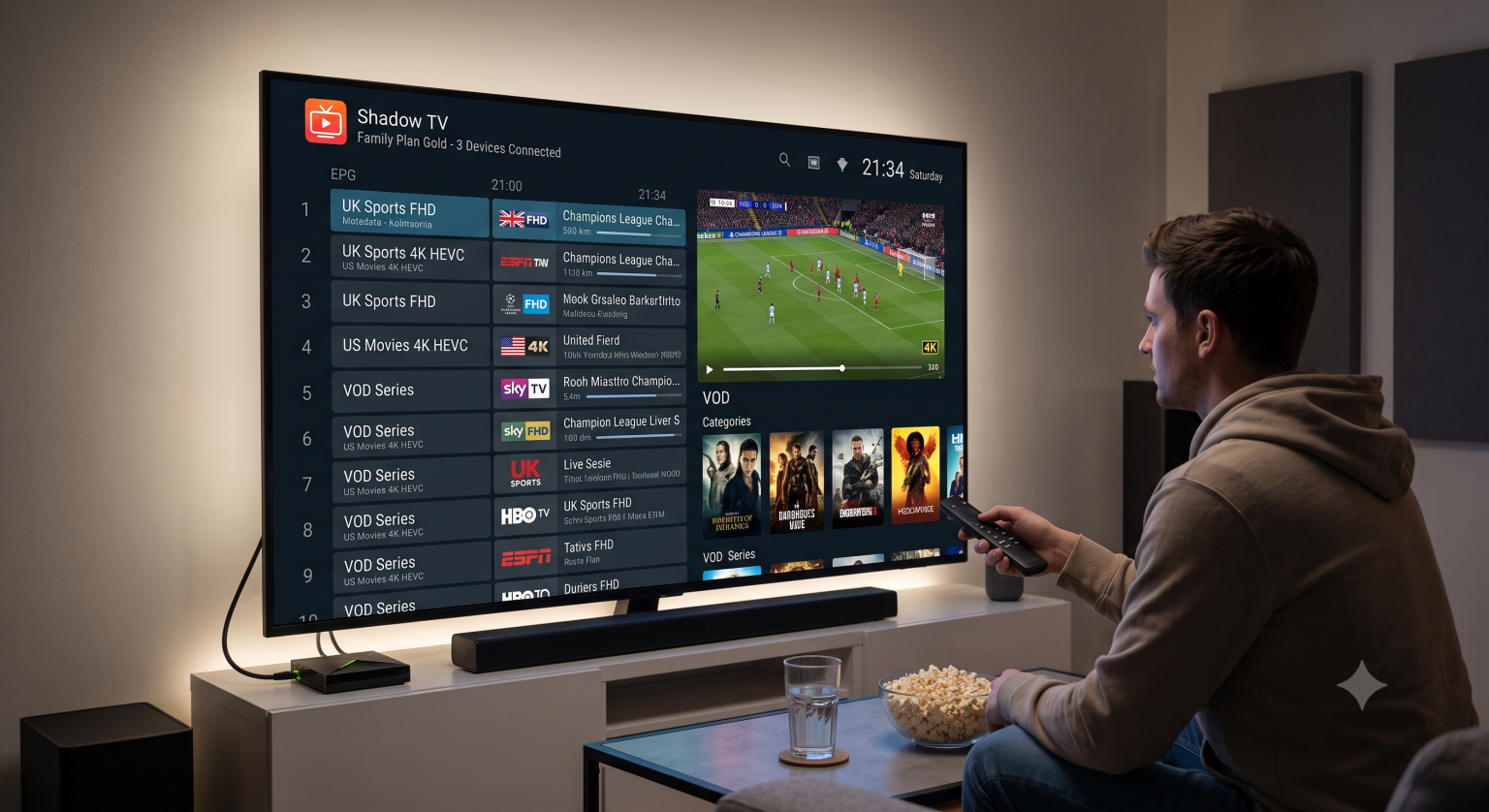
The "Fake 4K" Problem
Most services promising “50,000 channels in 4K” are artificially upscaling 720p or 1080p feeds. Genuine 4K live streaming requires massive bandwidth and modern video compression.
If your provider’s backend isn’t utilizing HEVC (H.265) or AV1 codecs, you are not receiving true 4K you are just consuming extra data for a stretched picture.
Hardware Bottlenecks: It's Not Always the Server
A common mistake is blaming the IPTV subscription when the actual bottleneck is the television’s native processor. Smart TV operating systems struggle to process heavy EPG (Electronic Program Guide) data.
| Operating System | Native IPTV Performance | Recommended Action |
| Android TV / Google TV | Excellent | Install Smarters Pro, TiviMate, or XCIPTV directly. |
| LG WebOS | Moderate | Monitor memory usage; switch to an external box if the UI lags. |
| Samsung Tizen | Poor to Moderate | Strict app store limits often require web wrappers. |
If you are using WebOS or Tizen and experiencing app crashes, offload the processing to a dedicated Android box (like an Nvidia Shield or a Firestick 4K Max) before changing your provider.
2026 IPTV Providers: The Stress Test Results
After testing several highly-rated services against peak weekend traffic, a few distinct patterns emerged regarding server stability.
1. Shadow TV (Top Pick for Uptime)
Shadow TV‘s routing handles peak loads significantly better than standard resellers. Channel switching is nearly instantaneous, and their VOD (Video on Demand) library is properly categorized rather than dumped into a single unstructured folder.
For multi-screen setups, their Family Plan Gold (12 Months / 3 Devices) is highly efficient, eliminating the need to purchase separate M3U lines for different rooms in the house.
2. KenoaTV (Strong for North America)
KenoaTV maintains solid anti-freeze technology, particularly on North American sports packages. While their VOD library is smaller than Shadow TV’s, they are a reliable secondary option if your primary goal is live weekend sports without lag.
3. Sonix IPTV (For Advanced Users)
Sonix offers deep backend API access for users who prefer to heavily customize their own M3U playlists. It is unnecessarily complex for a standard viewer, but excellent for home-network enthusiasts.
The Anti-Buffer Checklist
Before purchasing any yearly IPTV subscription, secure your own network setup:
Use Ethernet, Not Wi-Fi: Live streams cannot buffer in advance like Netflix. A micro-drop in a Wi-Fi signal will freeze a live feed instantly.
Bypass ISP Throttling: Many Internet Service Providers throttle known IPTV servers during major sporting events. Routing your connection through a lightweight VPN will mask the traffic and bypass this restriction.
Limit Your EPG Data: If your player app takes three minutes to load, your EPG file is too large. Configure your app settings to hold only 24 to 48 hours of guide data instead of a full 7 days.