
Wenn Sie dieses Jahr immer noch Spitzenpreise für herkömmliches Kabelfernsehen zahlen, gehören Sie zur Minderheit. Der Wandel hin zum Internet Protocol Television (IPTV) hat im Jahr 2026 einen Wendepunkt erreicht. Angetrieben durch den massiven Ausbau von 5G-Netzen und Glasfaser-Breitbandanschlüssen bis ins Haus gehören die Zeiten von verpixelten Streams und endlosem Puffern weitgehend der Vergangenheit an.
Doch angesichts Tausender Anbieter, die den Markt überschwemmen, ist es schwierig, den Bester IPTV-Dienst im Jahr 2026 kann sich anfühlen, als würde man sich durch ein Minenfeld bewegen. Viele behaupten, “4K UHD ”Kanäle“ und ”Frostschutztechnologie“, versagen jedoch, wenn der Serververkehr am Wochenende sprunghaft ansteigt.
Wenn Sie den Kabelanschluss kündigen möchten, ohne dabei den Verstand zu verlieren, finden Sie hier genau das, worauf Sie bei einem erstklassigen Anbieter achten sollten IPTV-Anbieter heute.
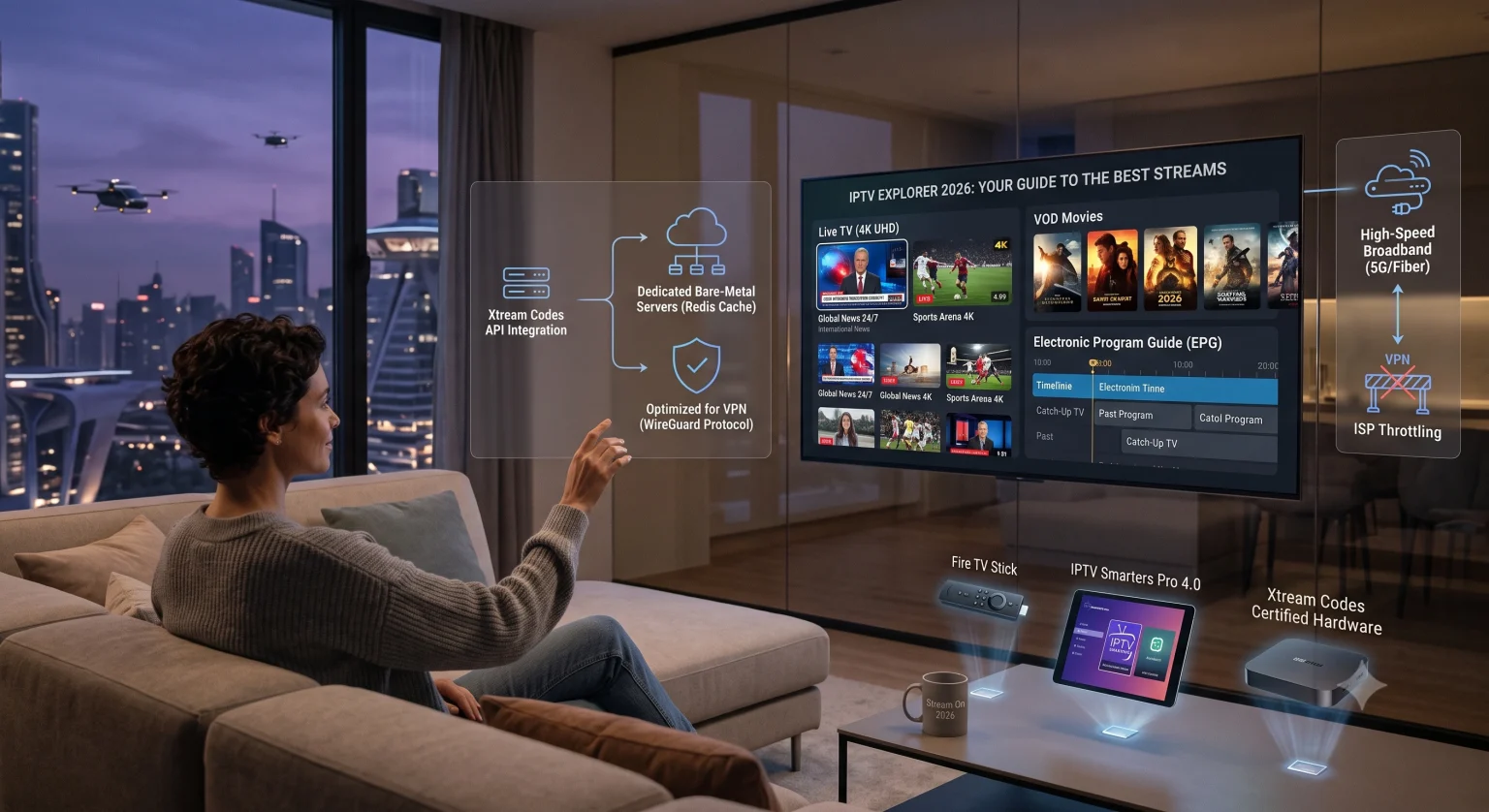
1. Achten Sie auf eine API-Integration statt auf reine M3U-Links
Vor einigen Jahren bedeutete der Abschluss eines IPTV-Abonnements noch, dass man eine riesige, unbearbeitete .m3u Link. Heutzutage stützen sich Premium-Dienste auf die Xtream Codes-API.
Warum ist das wichtig? Eine reine M3U-URL zwingt Ihr Streaming-Gerät dazu, eine riesige Textdatei mit Zehntausenden von Kanalzeichenfolgen direkt in den Arbeitsspeicher herunterzuladen. Dies ist der Hauptgrund für Verzögerungen bei der Menüanzeige auf älteren Smart-TVs und Streaming-Sticks. Die Xtream Codes-API hingegen ruft Kategorien dynamisch ab. Es ruft Daten erst dann ab, wenn Sie einen bestimmten Ordner öffnen, sodass Ihr Gerät schnell und reibungslos läuft.
2. Serverinfrastruktur: Das Ende des Shared Hostings
Das wichtigste Unterscheidungsmerkmal der führenden IPTV-Anbieter im Jahr 2026 ist ihre Backend-Infrastruktur. Preisgünstige Anbieter mieten oft überlastete, gemeinsam genutzte Serverkapazitäten. Wenn ein großes Live-Pay-per-View-Ereignis (PPV) stattfindet, sind diese Server überlastet, und Ihr Bildschirm friert ein.
Die besten IPTV-Anbieter verwalten mittlerweile ihre eigenen Bare-Metal-Server. Außerdem nutzen sie moderne In-Memory-Datenbanken (wie Redis), um Benutzeranmeldungen und Sitzungstoken sofort zu verarbeiten. So wird sichergestellt, dass Ihr 4K-Stream auch während der abendlichen Hauptsendezeiten stabil bleibt.
3. Erweiterte EPG- und Catch-Up-TV-Funktionen
Eine riesige Senderliste nützt nichts, wenn man nicht herausfinden kann, was gerade läuft. Moderne IPTV-Plattformen bieten äußerst reaktionsschnelle elektronische Programmführer (EPG), die das elegante Erscheinungsbild herkömmlicher Kabelreceiver nachahmen.
Noch wichtiger ist es, einen Anbieter zu suchen, der eine zuverlässige TV zum Nachholen Funktion. Die besten Plattformen speichern Live-Kanäle für 7 bis 30 Tage, sodass Sie zurückspulen und Sportübertragungen, Nachrichten oder Sendungen ansehen können, die Sie verpasst haben, ohne einen DVR einrichten zu müssen.
4. Hardware- und App-Kompatibilität
Ihr IPTV-Erlebnis ist nur so gut wie die App, mit der Sie es abspielen. Der Branchenstandard hat sich von klobigen, integrierten Web-Playern entfernt.
Ganz gleich, ob Sie nach IPTV für Firestick, eine Android-TV-Box oder ein Apple TV suchen – Ihr Anbieter sollte sich nahtlos in hochwertige Mediaplayer von Drittanbietern integrieren lassen. Im Jahr 2026, TiviMate bleibt der Goldstandard für Android und Fire OS, während IPTV Smarters Pro ist nach wie vor die erste Wahl für plattformübergreifende Nutzer und iOS-Nutzer. Stellen Sie sicher, dass Ihr Anbieter es Ihnen ermöglicht, Ihre Zugangsdaten über diese professionellen Apps weiterzuleiten.
5. Bandbreitendrosselung durch Internetdienstanbieter und die Notwendigkeit eines VPN
Selbst wenn Sie das beste IPTV-Abonnement der Welt haben, könnte Ihr Internetdienstanbieter (ISP) den Engpass darstellen. Internetdienstanbieter nutzen häufig Deep Packet Inspection (DPI), um Live-Streaming-Verkehr mit hohem Datenvolumen zu identifizieren und dessen Bandbreite zu drosseln.
Um dem entgegenzuwirken, sind die führenden IPTV-Dienste im Jahr 2026 in hohem Maße für die Nutzung von VPNs optimiert. Wenn Sie Ihren Stream über ein leistungsstarkes VPN leiten (insbesondere solche, die das schnelle WireGuard-Protokoll nutzen), wird Ihr Datenverkehr verschlüsselt. Für Ihren Internetanbieter sieht das einfach wie normales Surfen im Internet aus, wodurch automatische Bandbreitenbeschränkungen vollständig umgangen werden.
So prüfen Sie einen Anbieter, bevor Sie sich festlegen
Kaufen Sie niemals gleich zu Beginn ein Jahresabonnement. Das Markenzeichen eines selbstbewussten, hochwertigen IPTV-Anbieters ist eine Probezeit. Halten Sie Ausschau nach Anbietern, die eine kostenlose 24-Stunden-Testversion oder einen sehr günstigen 48-Stunden-Pass anbieten.
In diesem Fenster können Sie zwei wichtige Kennzahlen überprüfen:
Zapping-Zeit: Wie schnell wird der Kanal geladen, wenn Sie zu ihm wechseln? Das sollte weniger als zwei Sekunden dauern.
Leistung zu Spitzenzeiten: Testen Sie den Dienst an einem Wochenende zwischen 19 und 22 Uhr. Wenn es dann zu Pufferungen kommt, ist er sein Geld nicht wert.
Die IPTV-Branche hat sich erheblich weiterentwickelt. Wenn Sie Wert auf eine stabile Infrastruktur, API-Integration und gute App-Kompatibilität legen, finden Sie problemlos einen Dienst, der herkömmliches Kabelfernsehen zu einem Bruchteil der Kosten sinnvoll ersetzt.