
Are you frustrated because your streaming service plays perfectly on a dusty, five-year-old device but freezes on your brand-new hardware? You are not alone. If you live in the US and are wondering why IPTV works old Android box not new, the culprit usually involves hidden network restrictions, outdated server links, or missing codecs.
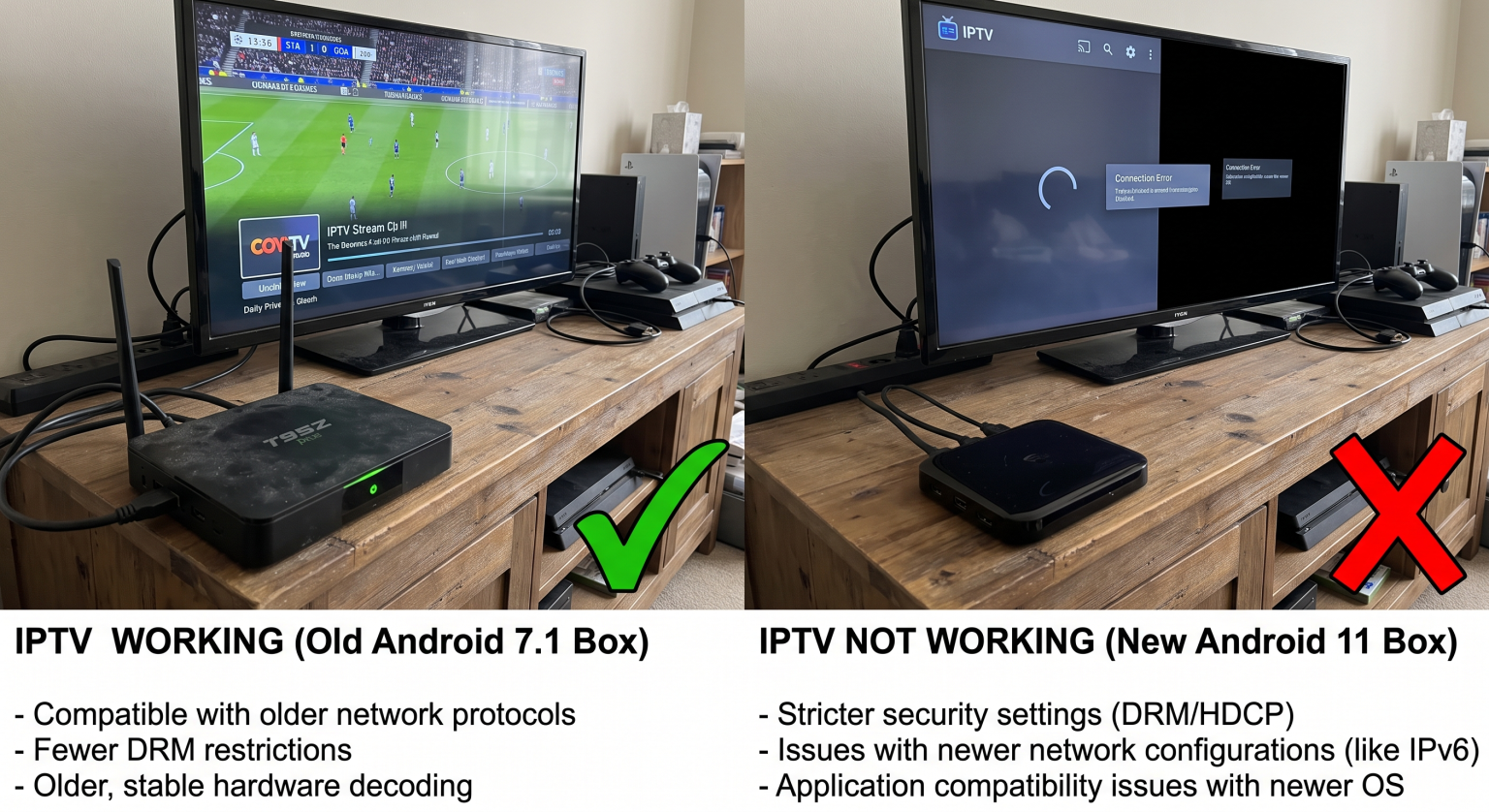
Why IPTV Works Old Android Box Not New: The Technical Breakdown
In newer operating systems (Android 9 and above), Google introduced strict security protocols that block insecure connections by default. If your television provider uses standard HTTP web links instead of secure HTTPS, your new device will automatically block the stream. Meanwhile, your older Android 7 setup bypasses this security check entirely, letting the video play without a hitch.
The “Cleartext HTTP Traffic” Problem
New Android TV boxes require secure, encrypted connections to fetch media. You will often see buffering, a black screen, or a “playback failed” error if the media player app encounters unencrypted data.
Codec Compatibility and Hardware Decoding
Older boxes were built with broad, forgiving hardware decoders that accepted older video formats. New devices prioritize modern, highly compressed formats like H.265 (HEVC) or AV1. If your provider’s feed relies on a legacy audio or video codec that the new box lacks native support for, the stream will fail to decode properly.
Old vs. New Android TV Boxes: What Changed?
| Características / Especificaciones | Old Android Box (e.g., Android 7/8) | New Android Box (Android 10/11+) |
| Default Security | Allows unencrypted HTTP traffic | Blocks unencrypted HTTP (Cleartext) |
| Decodificación por hardware | Broad support for legacy codecs | Optimized for HEVC/AV1, drops old codecs |
| App Architecture | 32-bit streaming apps fully supported | Requires strict 64-bit app compliance |
How to Fix Streaming Issues on Your New Device in the US
Local internet service providers across the US are cracking down on unverified streaming traffic, making modern device setup slightly trickier. Fortunately, a few simple adjustments in your application settings can resolve these playback headaches.
Switch Player Apps: Use a modern, actively updated application like TiviMate or XCIPTV that handles custom software decoding gracefully.
Change to HTTPS: Contact your service provider and ask if they have an updated M3U URL or portal link that uses secure HTTPS instead of HTTP.
Tweak Decoder Settings: Go into your application’s playback settings and switch from “Hardware Decoding” to “Software Decoding” to bypass missing native codecs.
Escribe aquí el texto del título
Upgrading your home entertainment shouldn’t mean losing your favorite channels. If you are still trying to figure out why your IPTV works old Android box not new, the solution is usually just a quick settings tweak or a software update away. Ready to experience buffer-free, high-definition streaming across the US? Suscríbete hoy mismo a nuestro boletín informativo premium sobre tecnología for exclusive setup guides, troubleshooting tips, and top-rated streaming hardware recommendations!
Preguntas frecuentes (FAQ)
Why does my stream buffer on a new box but not the old one?
Your new box might be struggling with strict ISP throttling, Wi-Fi compatibility issues, or aggressive background app management. Switching to a direct Ethernet connection and clearing your app cache often resolves this.
Can I force my new Android box to allow HTTP traffic?
End-users cannot easily change the OS-level cleartext restrictions without rooting the device. Your best option is to use a modern player app that natively bypasses this issue or switch to an HTTPS-enabled provider.