
If you’ve looked at your monthly entertainment bills recently and felt a mild wave of panic, you aren’t alone. Between massive cable packages and the endless stacking of streaming subscriptions, watching TV has somehow become more expensive and more complicated than ever.
We were promised that cutting the cord would save us money. But as we move through 2026, the reality looks a lot different. Subscribing to Netflix, Disney+, Hulu, and a live TV service to catch your local sports now costs roughly the same as that old, bloated cable bill we tried so hard to escape.
Enter IPTV.
Internet Protocol Television (IPTV) has been around for a while, but it’s currently having a massive moment. People are dropping both traditional cable and expensive mainstream streaming bundles to make the switch. If you’ve been wondering what the hype is all about and whether it’s actually worth your time here is exactly what is driving the massive shift in 2026.
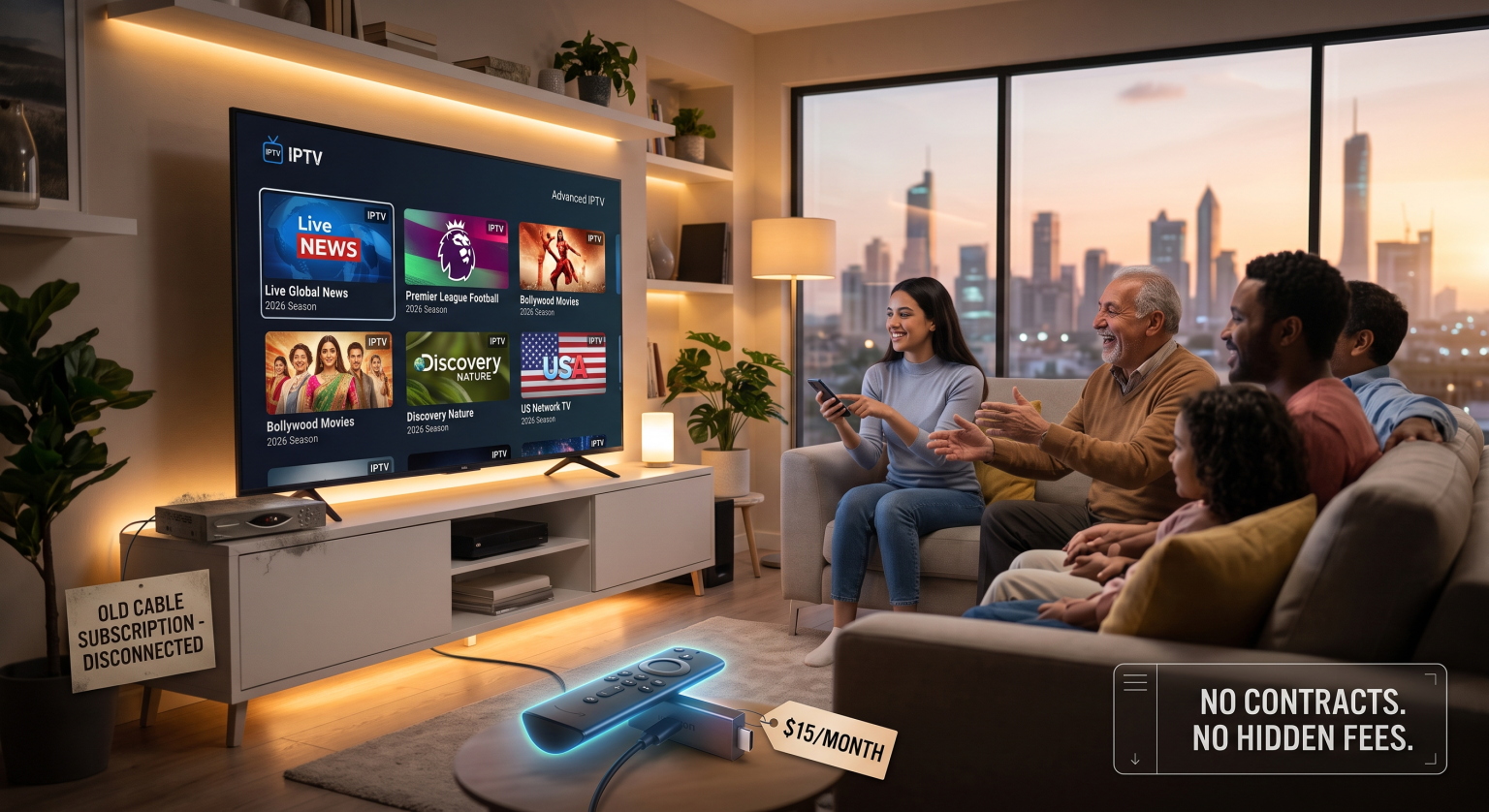
The Problem: Subscription Fatigue is Real
First, let’s talk about why people are jumping ship. A few years ago, you only needed one or two streaming apps to watch everything you cared about. Today, the market is incredibly fragmented. Shows are pulled from one platform and tossed onto another, password sharing has been heavily cracked down on, and monthly fees just keep inching up.
This phenomenon is called “subscription fatigue,” and it’s pushing viewers to look for alternatives. People are tired of opening four different apps just to figure out where the Sunday night football game is streaming. They want everything in one place, without needing to sign a two-year contract or hand over $100+ every month.
What Makes IPTV the Go-To Solution Right Now?
Unlike traditional cable that relies on physical wires or satellite dishes, IPTV delivers live television channels and on-demand content directly through your internet connection. You get a massive channel list just like the old days, but the delivery is entirely digital.
Here is why millions of users are finally pulling the trigger on IPTV this year:
1. Unbeatable Pricing
Cost is the undisputed king of why people switch. The average cable bill can easily exceed $100 per month. Factor in equipment rental fees and hidden broadcast surcharges, and you’re paying a premium just for the privilege of watching ads. Services IPTV typically run anywhere from $10 to $25 a month for premium options, usually with zero hidden fees.
2. Global Content at Your Fingertips
Cable TV locks you into regional broadcasting. If you want international channels, you have to buy a pricey add-on package. IPTV completely breaks down those geographic borders. Whether you want to watch a local news broadcast from London, a soccer match from Spain, or a niche movie channel, it’s generally all accessible from the same interface.
3. Hardware Independence
Nobody likes those clunky cable boxes that take up space and collect dust. IPTV services run on the devices you already own. You can pull up your playlist on a Téléviseur connecté, an Amazon Firestick, your laptop, or even your smartphone while you’re sitting on a train. It’s entirely location-agnostic.
4. No Contracts
Cable companies love locking customers into long-term contracts, penalizing you heavily if you try to leave early. The IPTV market thrives on flexibility. The vast majority of providers operate on a month-to-month basis, letting you cancel or switch services anytime you want without hassle.
How Does It Stack Up?
If you are on the fence, it helps to see the numbers side-by-side. Here is a quick breakdown of how IPTV compares to both traditional cable and standard streaming setups in 2026:
| Fonctionnalité | IPTV | Traditional Cable | Stacked Streaming (Netflix + Hulu Live, etc.) |
| Average Monthly Cost | $10 – $25 | $100 – $150+ | $80 – $110+ |
| Sélection des chaînes | Thousands (Global & Local) | Limited national/regional tiers | Highly fragmented by platform |
| Matériel requis | Any smart device or Firestick | Leased, bulky set-top boxes | Any smart device |
| Contract Terms | Month-to-month | 12 to 24-month lock-in | Month-to-month |
| Live Sports Access | Usually included | Requires premium sports tiers | Often spread across multiple apps |
What You Need to Know Before Switching
It’s not entirely flawless, and there are a couple of things you need to have in place for a smooth experience.
Because everything is delivered online, your internet connection needs to be rock solid. If your Wi-Fi constantly drops or runs at dial-up speeds, you are going to deal with buffering. For a crisp, uninterrupted 4K or HD stream, you generally want an internet speed of at least 30 to 50 Mbps.
Additionally, the IPTV market is vast. While there are plenty of legitimate and highly reliable services, the cheaper, less reputable ones can sometimes suffer from outages during massive live events (like big PPV fights or playoff games) when servers get overloaded. It pays to do a little research, read reviews, and take advantage of the free trials most providers offer before handing over your credit card.
En résumé
The television landscape has changed permanently. Viewers are realizing they hold the power, and they no longer have to settle for restrictive contracts or piecemeal streaming packages that drain their wallets.
IPTV is thriving in 2026 because it solves the core issues modern viewers face: it brings everything back into one unified place, drops the price drastically, and gives you the freedom to watch on your own terms. If you have a solid internet connection and a streaming stick, making the switch might just be the easiest way to save hundreds of dollars this year.