
When you turn on your television, you might hear the sound but see a completely black screen. This is a common problem with home entertainment systems. Many people wonder if the HDMI cable is responsible for this issue. The short answer is yes.
An HDMI cable transmits both video and audio signals from a device to a television. However, high-quality video data requires much more capacity than audio data. If a cable is damaged or cannot handle high data speeds, the video signal fails first.
This article explains why an HDMI cable causes a black screen while the audio still works. This article also provides simple steps to fix the problem quickly.
Kort svar
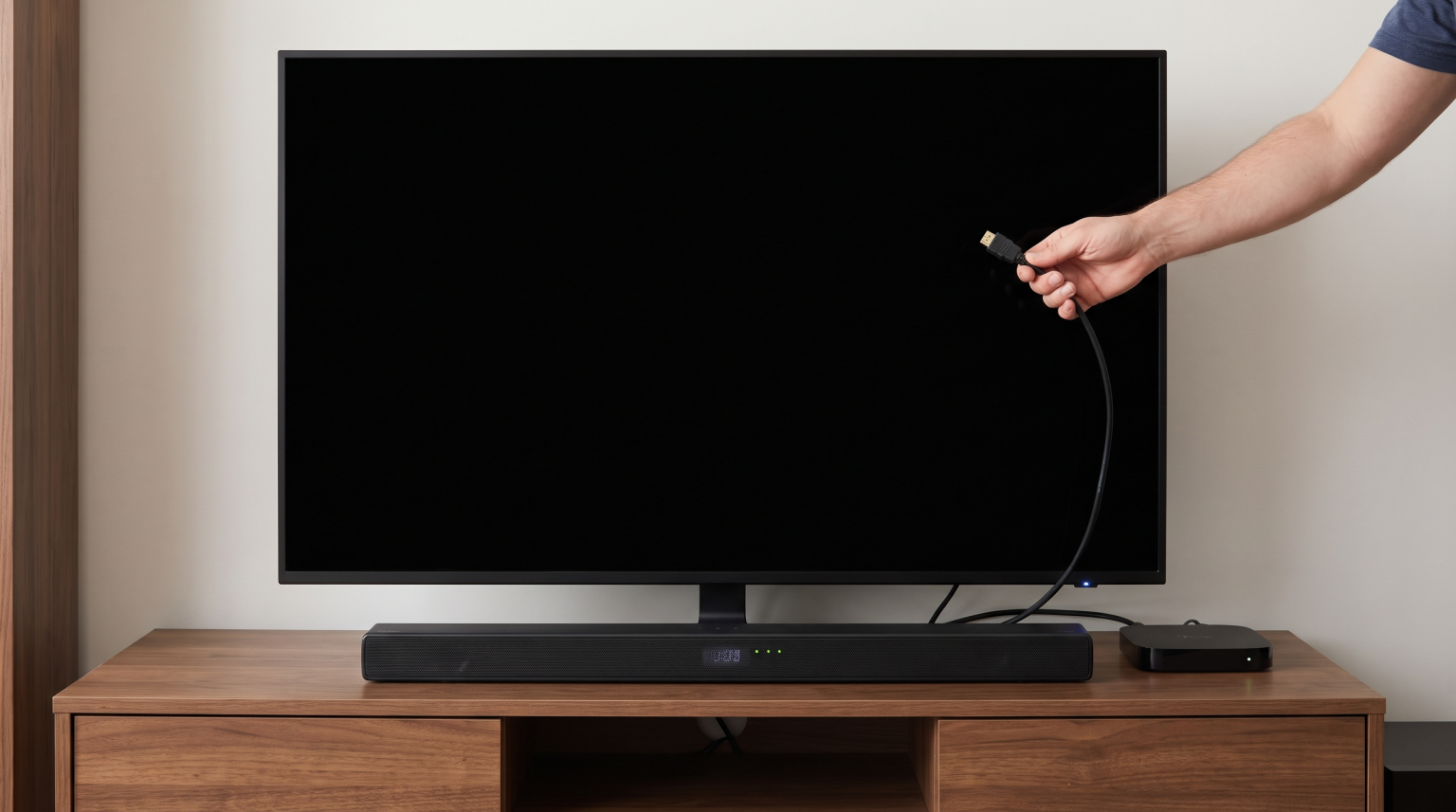
Yes, an HDMI cable can cause a black screen while the audio continues to work. Video signals require significantly more data bandwidth than audio signals. If an HDMI cable is old, damaged, or cannot support the data speed required for 4K video, the video signal will fail. Meanwhile, the smaller audio signal can still reach the television. To fix this problem, you should check the cable connections, lower the video resolution on your streaming device, or replace the old cable with a modern Ultra High Speed HDMI cable.
Why the Video Signal Fails Before the Audio Signal
HDMI stands for High-Definition Multimedia Interface. An HDMI cable contains multiple small wires inside. These wires carry different types of data.
Video files are very large. Modern video formats, such as 4K resolution and High Dynamic Range (HDR), require a massive amount of data to travel through the cable every second. Audio files are much smaller. Even high-quality surround sound requires only a small fraction of the data speed that 4K video requires.
When an HDMI cable reaches its maximum data limit, the cable cannot transfer the heavy video signal. Because the audio signal is small and light, the audio signal travels through the cable successfully. This creates the situation where your [Main Keyword: HDMI black screen audio works] normally.
Common Causes of the Black Screen Problem
Several different factors can cause a black screen with working audio. Here are the most common causes.
1. Insufficient Cable Bandwidth
Older HDMI cables were designed for 1080p High Definition video. These old cables transfer data at 10 Gigabits per second (Gbps). Modern 4K televisions require cables that can transfer data at 18 Gbps or 48 Gbps. If you connect a 4K streaming box to a 4K television using an old HDMI cable, the screen will remain black because the cable cannot process the 4K video data.
2. HDCP Connection Errors
HDCP stands for High-bandwidth Digital Content Protection. HDCP is a security system that prevents people from copying digital movies and television shows. When you connect a streaming device to a television, the two devices use the HDMI cable to verify the HDCP security.
If the HDMI cable has a minor defect, this security check fails. When the security check fails, the television intentionally blocks the video signal and displays a black screen. However, the television might still play the audio signal.
3. Physical Cable Damage
HDMI cables can break. If you bend an HDMI cable at a sharp angle, the tiny internal wires will break. A broken internal wire can stop the video data while the audio wires remain intact. Dust and dirt inside the HDMI connector can also block the video pins.
4. Incorrect Device Resolution
Sometimes, a streaming device sends a video resolution that the television cannot display. For example, if your streaming box sends a 4K video signal, but your television only supports 1080p, the television screen will go black. The audio will still work because audio formats are universally compatible.
HDMI Cable Generations Compared
To avoid a black screen, you must use the correct HDMI cable for your television. This table explains the differences between HDMI cable versions.
| HDMI Version | Maximum Data Speed | Supported Video Resolution | Status for Modern Smart TVs |
| HDMI 1.4 | 10.2 Gbps | 1080p and 4K at 30Hz | Too slow for modern 4K video |
| HDMI 2.0 | 18 Gbps | 4K at 60Hz | Good for standard 4K viewing |
| HDMI 2.1 | 48 Gbps | 4K at 120Hz and 8K | Best for gaming and live sports |
How to Fix the Black Screen Issue
If you experience the HDMI black screen audio works issue, follow these steps to restore your video signal.
Step 1: Check the Connections
Unplug the HDMI cable from the television and from the external device. Wait ten seconds. Plug the cable back in firmly. Ensure the cable clicks into place. A loose connection often causes video loss.
Step 2: Try a Different HDMI Port
Most televisions have three or four HDMI ports. Unplug the cable from HDMI Port 1 and plug the cable into HDMI Port 2. Use your television remote control to select the new HDMI input. Sometimes, a single HDMI port on a television stops working.
Step 3: Lower the Video Resolution
If you use a streaming device, use the device remote control to open the settings menu. Find the display settings. Change the video resolution from 4K to 1080p. If the picture returns, your HDMI cable is too slow for 4K video.
Step 4: Restart Both Devices
Turn off the television and the streaming device. Unplug both devices from the electrical wall socket. Wait two minutes. Plug the devices back into the wall socket and turn the devices on. This action resets the HDCP security connection.
Step 5: Replace the HDMI Cable
If the previous steps do not work, your HDMI cable is likely broken or too old. Purchase a new cable. Look for the phrase “Ultra High Speed HDMI” on the box. This label guarantees the cable supports HDMI 2.1 and 48 Gbps data transfer.
How HDMI Cables Affect IPTV Streaming
Many users watch TV Shadow IPTV using an external streaming device, such as an Android TV box, an Apple TV, or an Amazon Fire TV Stick. These external devices connect to the television using an HDMI cable.
IPTV services deliver live television channels and video-on-demand content over the internet. When you select a 4K movie on your IPTV app, the streaming device must send that 4K data through the HDMI cable. If your cable is too old, you will hear the movie audio, but you will see a black screen.
Additionally, low-quality HDMI cables can cause image degradation. If you recently bought a new television and your IPTV picture does not look clear, the television processing or the HDMI cable might be responsible. For more information on this topic, read our guide explaining Hvorfor ser IPTV uskarpt ut på en ny 4K-TV?.
If you use a Smart TV app directly on your television (such as a Samsung or LG television), you do not need an HDMI cable for IPTV. The application runs internally.
Watching Live Football: Do HDMI Cables Matter?
Live sports broadcasts require high technical specifications. When you watch live football, the camera moves quickly across the grass. To keep the moving football clear, the television must update the image many times per second. This is called the refresh rate.
Modern televisions can update the screen 60 times per second (60Hz) or 120 times per second (120Hz). A 120Hz television provides a much smoother picture for live football. To learn more about refresh rates, read our comparison of 60 Hz- og 120 Hz-TV-er til direktesendt fotball.
To send a 4K resolution picture at 120 frames per second, the HDMI cable must transfer data extremely fast. An HDMI 2.0 cable cannot transfer 4K video at 120Hz. If you force an HDMI 2.0 cable to transmit 4K at 120Hz, the video data will crash. You will hear the football commentators, but the screen will go black.
For the best live football experience with external streaming boxes, always use an HDMI 2.1 cable. This ensures the fast motion video data reaches your television without causing a black screen.
Konklusjon
The issue where an HDMI black screen audio works is frustrating, but the problem is usually simple to fix. Because video files require much more data capacity than audio files, a weak or old HDMI cable will drop the video picture while continuing to play the sound.
To solve this problem, ensure your HDMI cable is connected securely. If the connection is secure, check your device resolution settings. If you use a modern 4K television or watch fast-moving sports like live football, you must use a modern HDMI 2.1 cable. Upgrading to a high-speed cable ensures your video and audio signals travel smoothly, allowing you to enjoy your TV Shadow IPTV content without interruptions.
Ofte stilte spørsmål (FAQ)
Do I need a special HDMI cable for 4K video?
Yes. You need an HDMI cable rated for at least 18 Gbps (HDMI 2.0). For the best 4K results, you should use a 48 Gbps cable (HDMI 2.1). Older cables cannot transfer 4K video data quickly enough, which results in a black screen.
Can a loose HDMI connection cause a black screen?
Yes. If the HDMI cable is slightly loose, the video pins inside the connector may lose contact with the television. Pushing the cable firmly into the port often solves the problem immediately.
How do I reset the HDMI connection?
Turn off your television and your external device. Unplug the power cables for both devices. Unplug the HDMI cable from both devices. Wait two minutes. Reconnect all cables and turn the power on. This forces the devices to create a fresh connection.