
The shift from traditional cable television to Internet Protocol Television (IPTV) has fundamentally changed how we consume media. With this shift comes an inevitable question that dominates search engines: Is there a way to get free IPTV?
The short answer is yes but the reality of what “free” actually means in the streaming world is complex. Navigating the space between legitimate free content and unauthorized streaming platforms requires an understanding of how these services operate, the quality you can expect, and the potential risks involved.
Here is a complete breakdown of the current IPTV landscape, separating the safe, legitimate options from the unreliable ones.
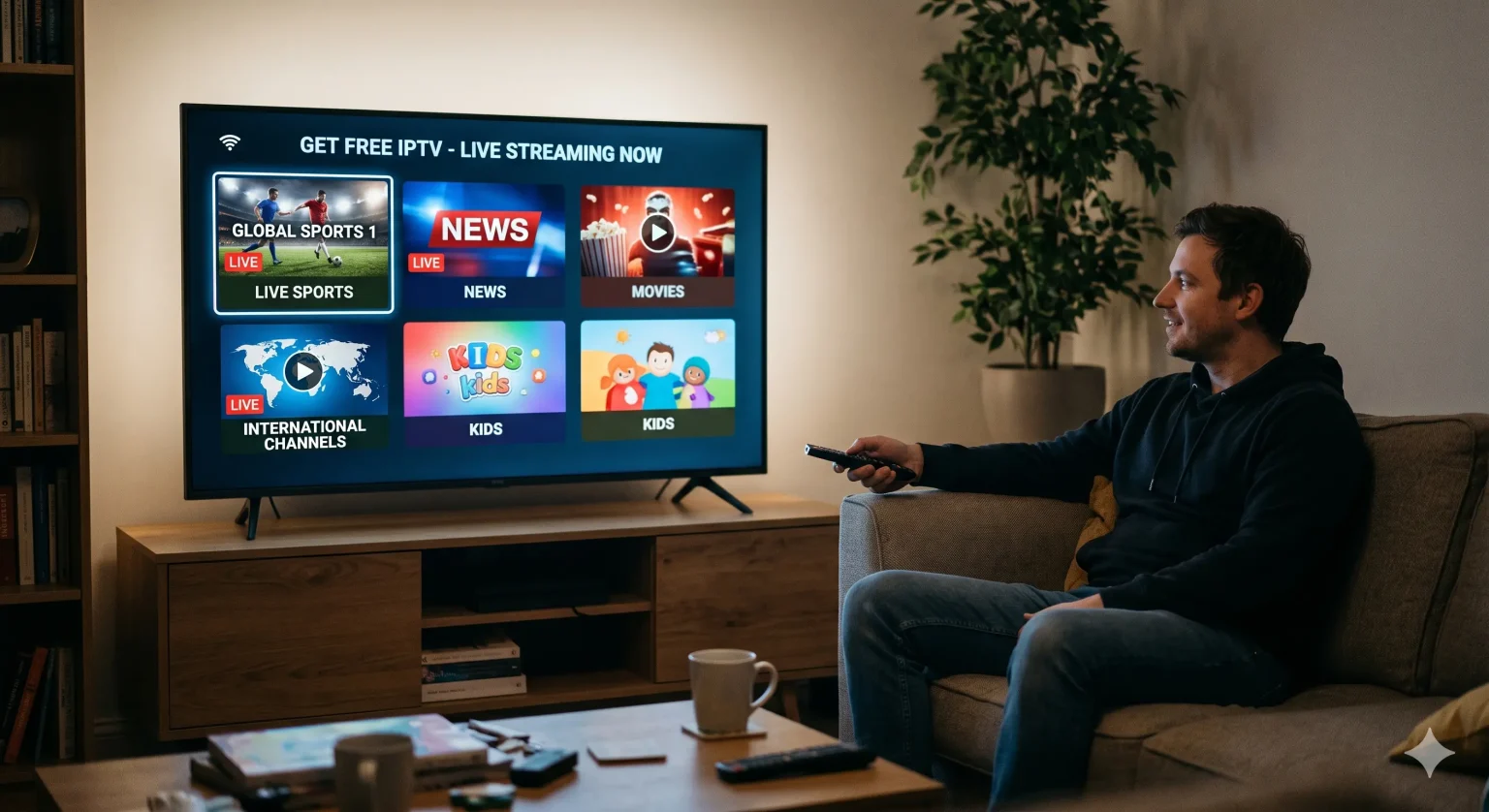
Legitimate Free IPTV Services (Ad-Supported)
If you are looking to cut the cord without spending a dime, several major corporations offer 100% legal, free IPTV services. These platforms are fully licensed, perfectly safe to use, and easily downloadable from official app stores. The trade-off? You will have to sit through commercial breaks.
These ad-supported video-on-demand (AVOD) and free ad-supported streaming television (FAST) platforms include:
Pluto TV: Owned by Paramount, this service offers hundreds of live, curated channels spanning news, classic television, niche movies, and sports highlights.
Tubi: A massive on-demand library featuring thousands of movies and TV shows, entirely supported by regular ad intervals.
The Roku Channel: While tightly integrated with Roku hardware, this service is available via web browsers and offers a surprisingly robust selection of live and on-demand content.
Freevee: Amazon’s ad-supported tier provides high-quality original content alongside older television staples.
The Verdict: These are the only truly “free” options that provide a risk-free, stable viewing experience. However, they will not give you access to premium live sports, newly released box-office hits, or top-tier cable networks.
The Reality of "Free" Premium IPTV Links (M3U Playlists)
A deeper search for free IPTV will often lead you to open-source M3U playlists specifically platforms like the GitHub-hosted IPTV Free TV repository. These are community-curated lists of publicly available broadcast links from around the world.
How Open M3U Playlists Work
Users simply copy an M3U URL and paste it into a compatible media player (like VLC, TiviMate, or Smarters Pro). This instantly populates a channel guide on your screen.
The Downside of Public Links
While technically free, relying on scraped public links for your main entertainment source is incredibly frustrating for several reasons:
Severe Buffering: Because these links are public, thousands of users try to access the same server simultaneously. During peak evening hours or major sporting events, the streams frequently freeze or crash entirely.
Dead Links: Broadcast links change constantly. A channel that works beautifully on Tuesday might be completely offline by Thursday, forcing you to constantly hunt for updated M3U files.
Inconsistent Quality: You will rarely find stable 4K or even solid 1080p high-definition streams on public playlists. Most are highly compressed to save bandwidth.
The Risks of Unauthorized "Free" IPTV Apps
The internet is full of standalone applications promising free access to premium cable channels, pay-per-view UFC fights, and global sports networks. These unauthorized services scrape premium content and distribute it without licensing.
Using these platforms comes with significant drawbacks that go beyond simple buffering:
Security Vulnerabilities: Apps downloaded outside of official stores (sideloaded APKs) frequently contain malware, trackers, or aggressive adware designed to harvest your data.
ISP Throttling and Blocks: Internet Service Providers actively monitor for unauthorized streaming traffic. If detected, they may throttle your internet speeds or block the connection to the streaming server entirely.
Abrupt Shutdowns: These services are routinely targeted by anti-piracy coalitions. You might set up a great system on Friday, only to find the entire service has been wiped off the internet by Sunday.
Why Paid IPTV Subscriptions Dominate the Market
For viewers who want the premium cable experience live sports, minimal delay, international networks, and an integrated Electronic Program Guide (EPG) the industry standard is shifting toward premium, paid IPTV subscriptions.
While not free, these services generally cost a fraction of a traditional cable bill (often ranging from $10 to $20 per month). Upgrading to a premium provider solves the primary issues of free streaming by offering:
Dedicated Server Infrastructure: Unlike public M3U lists, premium providers run their own optimized servers, drastically reducing buffering and latency.
True HD and 4K Content: Sufficient bandwidth allows for uncompressed, high-definition streaming that looks incredible on modern television setups.
Reliability: You are paying for uptime and stability. A good service should work seamlessly during peak hours without requiring you to constantly update links.
The Bottom Line
While there are legitimate ways to get free IPTV through ad-supported networks, obtaining permanent, high-quality access to premium live television and global sports for free is an illusion. For the most reliable, buffer-free viewing experience, investing in a reputable IPTV subscription remains the most sensible alternative to traditional cable.