
Are you tired of staring at a buffering screen every time you change the channel? If you want seamless entertainment, you need to understand what is IPTV zapping. Fast transitions are the key to a frustration-free media experience.
Whether you are streaming from Europe, the Americas, or anywhere worldwide, channel switching speed can make or break your viewing sessions. Let’s dive into why this metric is crucial for uninterrupted live TV.
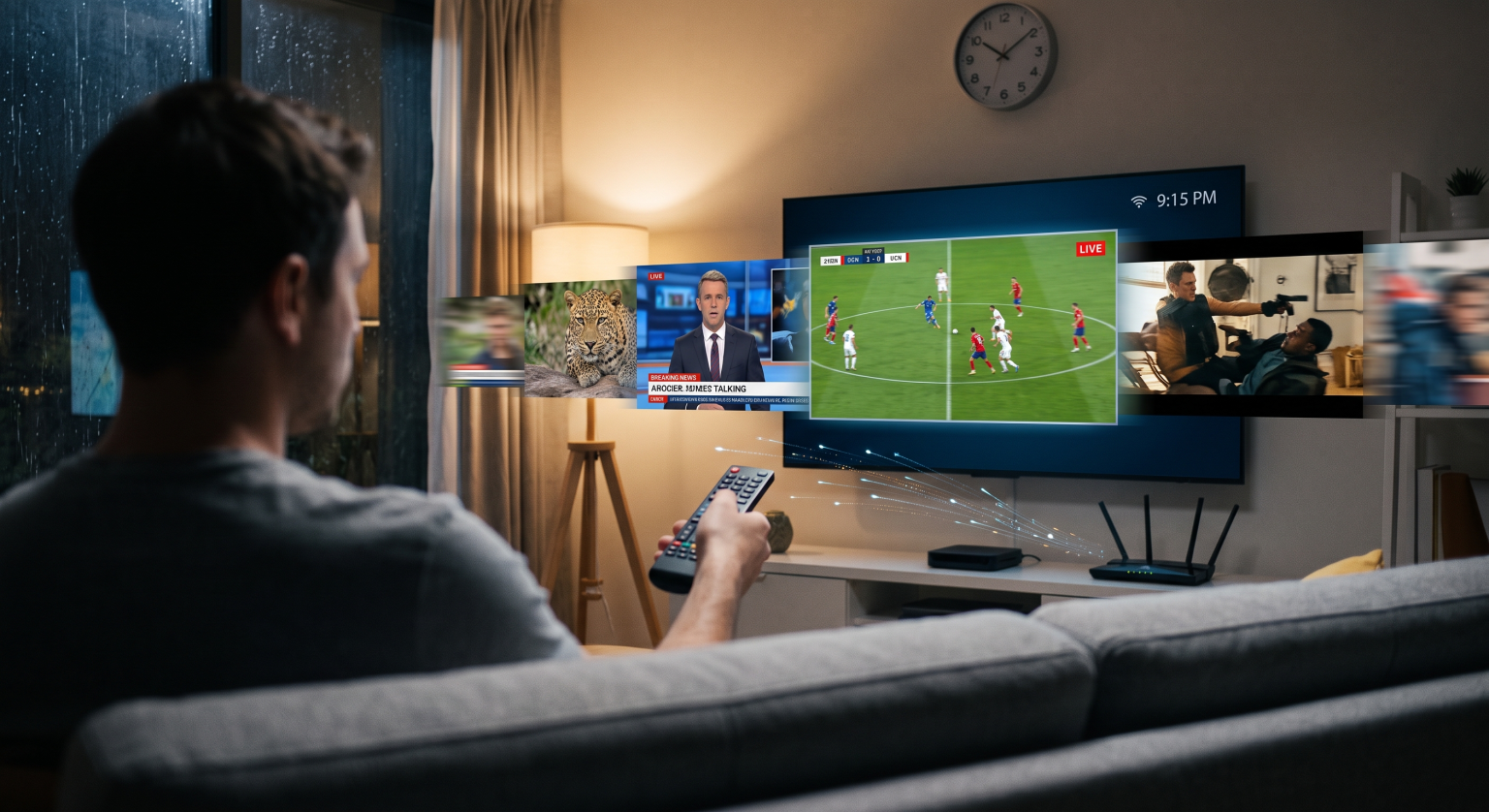
What Is IPTV Zapping?
In the world of internet television, “zapping” refers to the time it takes to switch from one channel to another. When you press the channel-up button, a complex data request happens behind the scenes to fetch the new broadcast.
A lower zapping time means an instant channel change, closely mimicking traditional cable TV. Understanding exactly what is IPTV zapping helps you choose the right provider and hardware for your home setup.
Why Channel Hopping Speed Matters
Nobody enjoys a laggy interface during a live sports event or a breaking news broadcast. Fast channel hopping speed ensures you never miss a crucial moment of the action. It keeps the viewer immersed and prevents the dreaded infinite loading wheel.
Furthermore, rapid stream load times reduce viewer frustration and enhance overall interface fluidity. High-quality media applications rely on optimized zapping speeds to deliver premium, reliable performance across all devices.
Comparison: Stream Load Times by Setup
Not all streaming environments are created equal. Below is a breakdown of how different setups impact your channel transition times worldwide:
| Setup Type | Average Zapping Time | Viewer Experience |
| Premium Server + Ethernet | 0.5 – 1.5 seconds | Instant & seamless |
| Standard Server + Wi-Fi | 2.0 – 4.0 seconds | Noticeable delay |
| Free/Public Playlists | 5.0+ seconds | Frustrating buffering |
How to Improve Your IPTV Channel Transition Times
Upgrading your network infrastructure is the fastest way to minimize delays. A stable local network ensures that data packets are delivered without interruption.
To immediately boost your speeds, follow these best practices:
Switch to Ethernet: Hardwired connections eliminate wireless interference and packet loss.
Upgrade your hardware: Modern smart TVs and dedicated set-top boxes process streams much faster than outdated tech.
Optimize buffer settings: Lowering the buffer size in your streaming app speeds up the initial stream load.
Choosing the Right Media Player
Your choice of software plays a massive role in zapping efficiency. Lightweight applications process playlist updates much faster than bulky, unoptimized apps.
Always ensure your application is updated to the latest version. Developers regularly release performance patches that dramatically improve channel switching speed.
Upgrade Your Viewing Experience Today
Fast zapping is the secret to a stress-free and enjoyable streaming session worldwide. Now that you fully understand what is IPTV zapping, it’s time to take control of your entertainment setup.
Ready to experience lightning-fast channel switching without the annoying buffering? Subscribe to our Premium Streaming Plan today and enjoy seamless entertainment instantly!
People Also Ask (FAQ)
Does internet speed affect IPTV zapping?
Yes, a faster and more stable internet connection directly reduces the time it takes to load a new stream. High bandwidth ensures quick and efficient data delivery.
What is a good channel switching speed?
An ideal zapping time is under 2 seconds. Anything faster feels instantaneous, while delays over 3 seconds can begin to disrupt your viewing experience.
Can a VPN slow down stream load times?
Sometimes, a VPN can add a slight delay due to server encryption overhead. However, choosing a premium VPN with high-speed servers minimizes this impact.