
Når folk begynder at undersøge, hvordan de kan sænke deres kabelregninger, dukker det samme spørgsmål uundgåeligt op på fora, sociale medier og søgemaskiner: Er IPTV er lovligt?
Der hersker stor forvirring omkring dette emne i 2026. Nogle betragter det som en forbudt teknologi, mens andre bruger det åbent hver eneste dag. Sandheden er faktisk meget enkel, men det kræver, at man forstår forskellen mellem teknologi selv og den indhold der bliver streamet.
Hvis du overvejer at købe et IPTV-abonnement i år, finder du her alt, hvad du skal vide for at sikre, at du streamer sikkert og trygt.
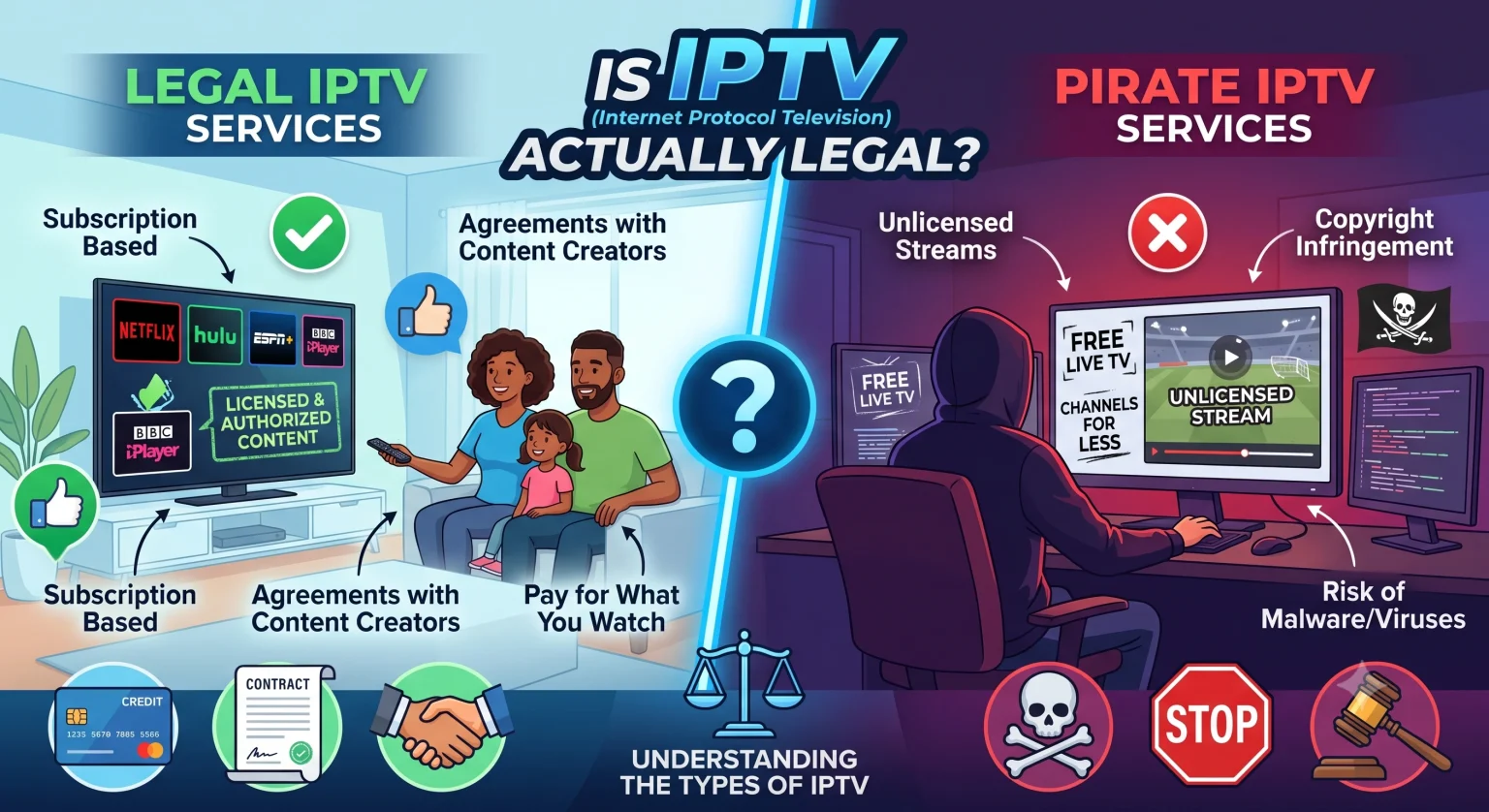
Det korte svar: Ja, IPTV-teknologi er 100% lovlig
Lad os først rydde den største misforståelse af vejen: Internet Protocol Television (IPTV) er ganske enkelt en distributionsmetode. Det er en fuldstændig lovlig teknologi, der bruges til at overføre videodata via internettet i stedet for via en parabol eller et koaksialkabel.
Hvis du nogensinde har brugt Netflix, Hulu eller endda de officielle streaming-apps fra store tv-netværk som NBC eller BBC, har du brugt IPTV-teknologi.
Lovligheden afhænger ikke af den hardware, du bruger (f.eks. en Firestick, Android-boks, eller Smart TV) eller den software, du installerer (som f.eks. TiviMate eller IPTV Smarters Pro). Appene er blot tomme medieafspillere, der ikke adskiller sig fra videoafspilleren på din smartphone.
Lovligheden afhænger udelukkende af én ting: Licenser.
Forskellen mellem lovlige og ulovlige tjenester
En tjeneste er fuldt ud lovlig, hvis udbyderen har erhvervet de nødvendige udsendelsesrettigheder og distributionsaftaler for de kanaler, som tjenesten tilbyder.
Tjenesten bliver ulovlig, når en udbyder opfanger et tv-signal (f.eks. en eksklusiv sportsudsendelse eller en pay-per-view-film) og videredistribuerer det til betalende abonnenter uden tilladelse fra ophavsretsindehaveren.
Sådan genkender du en ulovlig IPTV-udbyder: 4 vigtige advarselstegn
Med tusindvis af tjenester, der annoncerer online, kan det være svært at skelne mellem en legitim udbyder og en virksomhed uden tilladelse. Uautoriserede tjenester udviser dog næsten altid nogle få typiske advarselstegn:
Priser, der er “for gode til at være sande”: Transmissionsrettighederne til live-sport og premium-kanaler koster millioner af dollars. Hvis en udbyder tilbyder 20.000 kanaler, alle premium-sportspakker og et enormt VOD et udvalg af film, der i øjeblikket vises i biograferne, til $5 om måneden, og de betaler ikke for licenser.
Anonyme betalingsmetoder: Seriøse virksomheder benytter sikre og sporbare betalingsudbydere til direkte betaling. Hvis en tjeneste kræver betaling kun i kryptovaluta eller beder dig om at sende penge via apps til kontante overførsler, der ikke kan spores, eller via Telegram-beskeder, skal du udvise ekstrem forsigtighed.
Ingen kontaktoplysninger eller support: Pålidelige IPTV-tjenester har et dedikeret supportteam, klare servicevilkår og gennemsigtig kommunikation (ofte via Discord eller organiserede Telegram-grupper). Useriøse udbydere skjuler deres identitet, så de kan forsvinde uden at udbetale refusioner.
Modificerede eller “jailbreakede” apps: Hvis en udbyder opfordrer dig til at downloade en stærkt modificeret, uofficiel app fra en tilfældig hjemmeside i stedet for at bruge pålidelige apps fra Google Play eller Amazon App Store, udgør det en alvorlig sikkerhedsrisiko.
De reelle risici ved at benytte ulovlige tjenester i 2026
Selvom medievirksomhederne konstant slår ned på uautoriserede udbydere, er de største risici for den almindelige bruger ikke nødvendigvis af juridisk karakter, men derimod af økonomisk og teknisk karakter.
Driftsafbrydelser (den “sorte skærm”): Uautoriserede tjenester er ofte i søgelyset hos internetudbydere (ISP’er) og ophavsretsorganisationer. De er kendt for at blive lukket ned fra den ene dag til den anden. Hvis du har betalt for et 12-måneders abonnement, og serverne går offline i den anden måned, mister du dine penge.
Malware og datatyveri: Hvis du downloader uverificerede apps eller plugins fra tvivlsomme hjemmesider, kan det udsætte dit hjemmenetværk for malware, spyware og ransomware.
Konstant buffering: Uautoriserede udbydere oversælger ofte deres serverkapacitet. Under en større begivenhed kan deres servere ikke klare trafikken, hvilket medfører konstante afbrydelser og buffering.
Sådan streamer du sikkert og trygt
For at beskytte dig selv og sikre, at du får den bedste IPTV For at få den bedste oplevelse bør du følge et par grundlæggende regler. For det første bør du altid afprøve en udbyder ved hjælp af et kortvarigt abonnement (f.eks. et 1-måneders abonnement eller en 24-timers prøveperiode), før du binder dig for et helt år. På den måde kan du teste serverens stabilitet i spidsbelastningsperioder.
For det andet bør du bruge velrenommerede, selvstændige medieafspillere som f.eks. TiviMate eller IPTV Smarters Pro, i stedet for usikre brugerdefinerede apps.
Endelig anbefales det på det kraftigste at bruge et virtuelt privat netværk (VPN), når du streamer. Et VPN krypterer din internetforbindelse, hvilket beskytter dine data mod ondsindede tredjeparter og forhindrer din internetudbyder i kunstigt at begrænse din båndbredde, når du ser video i HD-kvalitet.
Hvis du forstår, hvordan teknologien fungerer, og ved, hvilke advarselssignaler du skal undgå, kan du nemt finde en stabil tjeneste af høj kvalitet, der giver en fantastisk underholdningsoplevelse uden de problemer, der er forbundet med traditionelt kabel-tv.
Denne video giver en tydelig gennemgang af, hvordan teknologien fungerer, samt forskellene mellem licenserede og ikke-licenserede streamingplatforme: IPTV forklaret på en enkel måde: lovligt eller ulovligt?