
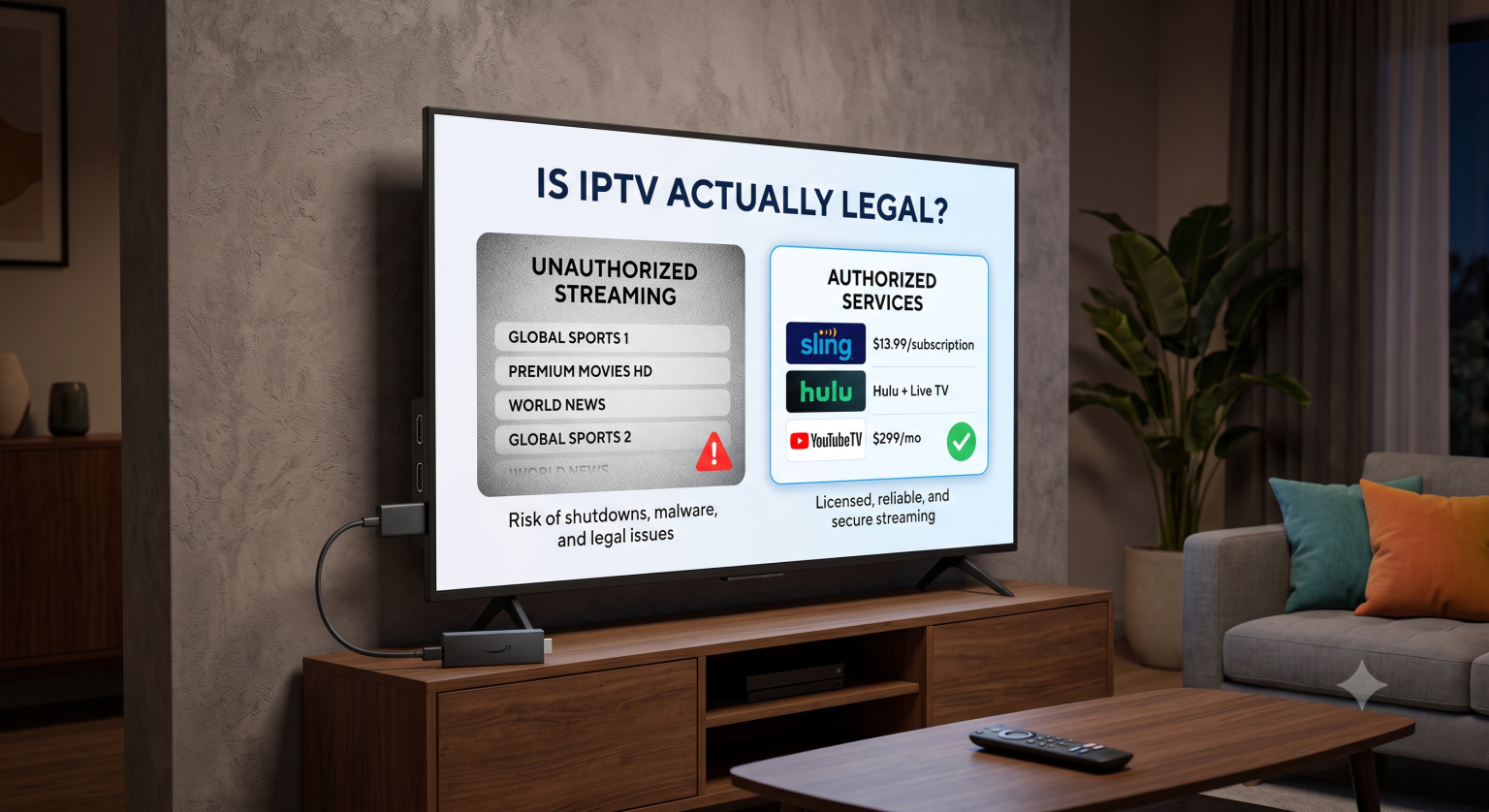
Het korte antwoord is ja: IPTV is 100% legaal.
Maar er zit een groot addertje onder het gras. Hoewel de onderliggende technologie volkomen legaal is, is de manier waarop sommige aanbieders er gebruik van maken dat niet. Als je maandelijks $10 betaalt voor 10.000 internationale zenders, waaronder topsport en nog niet uitgebrachte films, begeef je je waarschijnlijk op illegaal terrein.
Hier lees je precies hoe je het verschil kunt zien, waarom er verwarring bestaat en hoe je jezelf kunt beschermen bij het kiezen van een aanbieder.
Wat is IPTV nu precies?
IPTV staat voor Internet Protocol Television. In plaats van televisiesignalen te ontvangen via een dakantenne, een satellietschotel of een glasvezelkabel, ontvangt u ze via uw internetverbinding.
Dat is het. Het is gewoon een manier om iets te bezorgen.
Vragen of IPTV legaal is, is hetzelfde als vragen of een webbrowser legaal is. De browser zelf is volkomen legaal; of het gebruik ervan legaal is, hangt volledig af van de websites die je ermee bezoekt. Grote streamingplatforms zoals YouTube TV, Hulu + Live TV en Sling TV zijn technisch gezien allemaal IPTV-diensten. Ze betalen miljoenen aan licentievergoedingen aan omroepen om die inhoud legaal op je scherm uit te zenden.
De juridische problemen beginnen pas wanneer ongeautoriseerde doorverkopers die uitzendsignalen onderscheppen en toegang daartoe verkopen zonder de auteursrechthebbenden te vergoeden.
Legale versus illegale IPTV: hoe herken je het verschil?
Legitieme aanbieders opereren in het openbaar, terwijl ongeautoriseerde diensten zich verschuilen achter anonimiteit. Als u een nieuw IPTV-abonnement overweegt, vindt u hier een overzicht van de punten waarop u moet letten:
| Functie | Legitieme IPTV | Ongeautoriseerde IPTV |
| Prijzen | Voldoet aan de marktprijzen voor premiumkanalen | Verdacht goedkoop (bijv. $5-$15 per maand voor alles) |
| Betaalmethoden | Creditcards, PayPal, standaardbankoverschrijvingen | Cryptovaluta, niet-traceerbare cadeaubonnen |
| Zenderlijst | Specifieke pakketten die gekoppeld zijn aan regionale licenties | Beloft “alle kanalen wereldwijd” in één pakket |
| Bedrijfsgegevens | Geverifieerd bedrijfsadres, transparante voorwaarden | Geen fysiek adres, regelmatige wijzigingen van de domeinnaam |
| Apps en instellingen | Officiële apps op Roku, Apple TV en Google Play | Vereist het installeren via derden of niet-geverifieerde APK’s |
Als een aanbieder je vraagt om een op maat gemaakte, niet-geverifieerde app te gebruiken of strikt eist dat je met Bitcoin betaalt, handelt hij vrijwel zeker buiten de wettelijke kaders.
De werkelijke risico’s van het gebruik van ongeautoriseerde diensten
Mensen gaan er vaak vanuit dat het ergste kan gebeuren met een goedkope, illegale IPTV-dienst is een plotselinge stroomuitval. Hoewel willekeurige stroomuitval tijdens grote sportevenementen ontzettend vaak voorkomt, reiken de daadwerkelijke risico’s veel verder.
Malware en gegevensdiefstal: Ongeautoriseerde streaming-apps vormen een belangrijke bron van malware. Omdat deze apps de officiële veiligheidscontroles van de app-store omzeilen, kunnen ze gemakkelijk persoonlijke gegevens verzamelen, betalingsgegevens stelen of spyware op je apparaten installeren.
Juridische stappen: Hoewel de wetshandhaving zich vooral richt op de distributeurs en serverbeheerders, zijn eindgebruikers niet helemaal veilig. In de VS, het VK en de EU dwingen de autoriteiten internetproviders steeds vaker om gebruikerslogs over te dragen. In sommige rechtsgebieden zijn particulieren geconfronteerd met hoge boetes wegens herhaalde, opzettelijke inbreuken op het auteursrecht.
Beperking van de bandbreedte door internetproviders: Internetproviders houden het netwerkverkeer actief in de gaten. Als zij een enorm dataverbruik constateren dat afkomstig is van bekende illegale IPTV-servers, kunnen zij je bandbreedte beperken of je internetcontract volledig beëindigen wegens schending van hun servicevoorwaarden.
Geen kopersbescherming: Als een ongeautoriseerde dienst morgen uit de lucht gaat – wat vaak gebeurt doordat de autoriteiten domeinnamen in beslag nemen – ben je je abonnementsgeld kwijt en kun je geen terugbetaling vragen.
Heb je een VPN nodig voor IPTV?
Een virtueel privénetwerk (VPN) versleutelt uw internetverkeer en leidt het via een server op een andere locatie.
Als je in je eigen land gebruikmaakt van een legitieme dienst zoals Fubo of Sling TV, heb je strikt genomen geen VPN nodig. De dienst is wettelijk bevoegd om rechtstreeks naar uw thuisnetwerk te streamen, en uw internetprovider zal het verkeer niet markeren.
Veel gebruikers maken echter gebruik van VPN’s om te voorkomen dat hun internetprovider hun streaminggedrag in de gaten houdt of hun snelheid tijdens piekuren afremt. Hoewel een VPN je privacy waarborgt en je verbinding beveiligt, biedt het je geen juridische bescherming als je willens en wetens illegaal gekopieerde inhoud streamt. Het gebruik van een VPN om ongeautoriseerde streams te verbergen, blijft een inbreuk op het auteursrecht.
De veiligste aanpak voor 2026
De IPTV-markt verandert snel, en internationale autoriteiten treden harder dan ooit tevoren op tegen ongeautoriseerde doorverkopers. Om veilig en betrouwbaar te kunnen streamen, kun je het beste kiezen voor aanbieders die over de nodige uitzendrechten beschikken.
Diensten als YouTube TV, Philo, Sling TV en Fubo bieden de betrouwbaarheid van traditionele kabeltelevisie, maar dan zonder verborgen kosten en omvangrijke apparatuur. Ze zijn misschien wel duurder dan de ongeautoriseerde $10-pakketten waarbij “alles inbegrepen” is, maar je krijgt er gegarandeerde beschikbaarheid, HD-kwaliteit, uitstekende klantenservice en volledige gemoedsrust voor terug.