
Har svårt att välja mellan Fire TV Stick 4K Max och den nya 4K Select för din vardagsrumsinstallation? Om du använder IPTV-tjänster i USA är det avgörande att välja rätt hårdvara år 2026. Låt oss gå igenom det ultimata Firestick 4K Max vs 4K Select IPTV jämförelse så att du kan streama livesänd sport och underhållning utan det där irriterande buffringshjulet.
Varför den amerikanska streamingmarknaden kräver bättre hårdvara
I USA ökar internethastigheterna, men det gör även bandbreddskraven från 4K-streamingtjänster. När man utvärderar en ny streamingenhet handlar skillnaden mellan tröga menyer och smidigt kanalbyte i slutändan om processorkraft och stabil nätverksanslutning. För direktsända TV-strömmar är robust hårdvara inte längre en lyx – det är en nödvändighet.
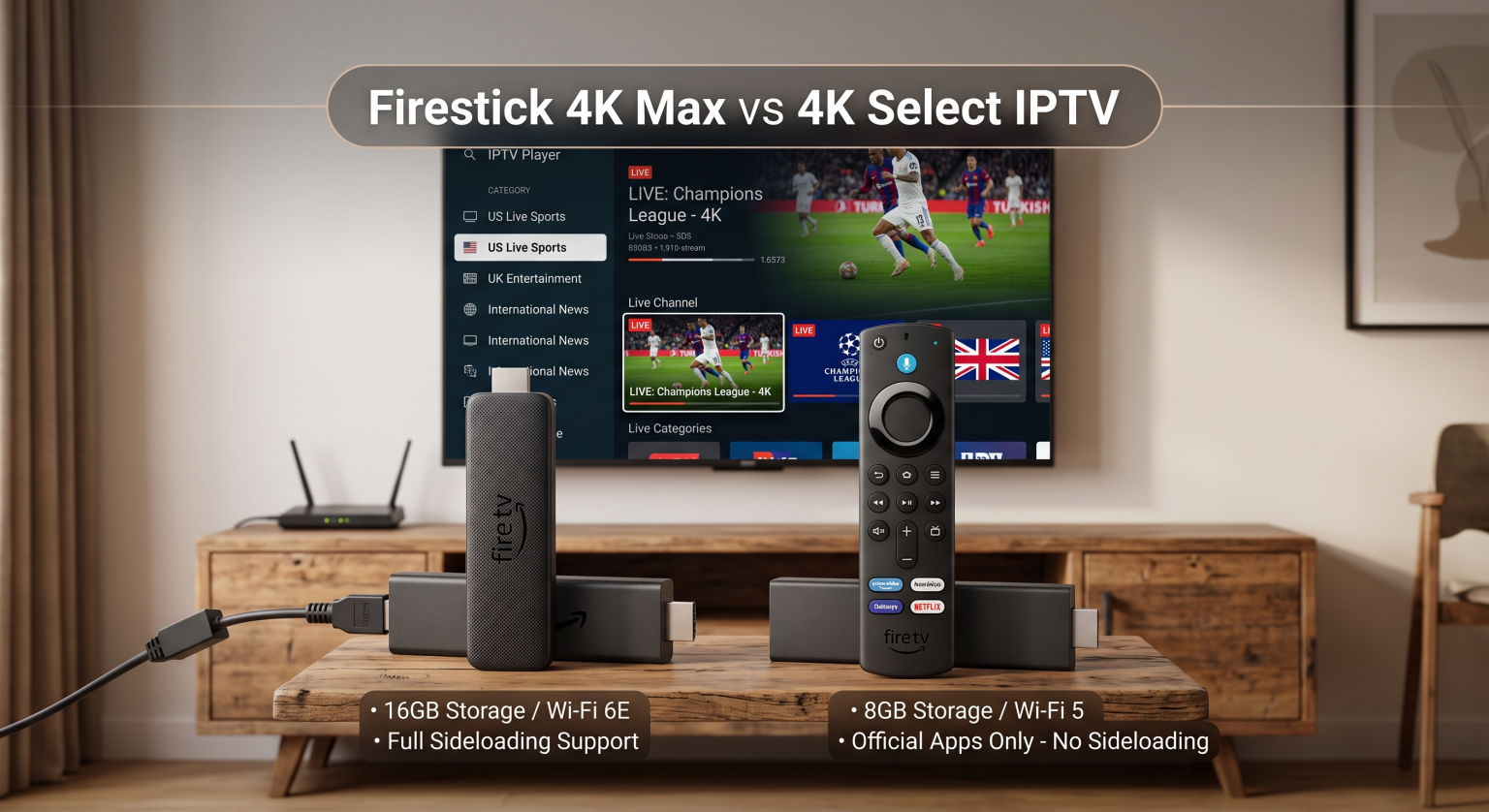
De viktigaste skillnaderna: Firestick 4K Max jämfört med 4K Select – IPTV-prestanda
När man sätter in Firestick 4K Max jämfört med 4K Select IPTV När man jämför prestanda spelar minne och operativsystem en avgörande roll. 4K Max körs på Fire OS, som bygger på ett Android-ramverk som enkelt stöder IPTV-appar från tredje part. 4K Select använder däremot Amazons nya Linux-baserade operativsystem Vega OS, vilket kraftigt begränsar vad man kan installera.
Sidoladdning och stöd för appar från tredje part
För de som helt har sagt upp sina kabel-tv-abonnemang är möjligheten att installera en IPTV-spelare via sidoladdning ett måste. Med 4K Max får du full frihet att installera egna APK-filer direkt ur lådan. Däremot begränsar 4K Selects operativsystem Vega OS dig strikt till godkända appar från Amazon Appstore, vilket gör den praktiskt taget oanvändbar för anpassade lösningar för direktsänd TV.
Hastighet, lagringsutrymme och Wi-Fi-funktioner
Funktionerna i 4K Max 16 GB lagringsutrymme, 2 GB RAM och blixtsnabbt Wi-Fi 6E. Select-modellen har skurit ner på vissa funktioner för att sänka kostnaderna och erbjuder endast 8 GB lagringsutrymme, 1 GB RAM och standard Wi-Fi 5. För krävande sändningar i högupplöst format förhindrar Max-modellens extra RAM-minne och överlägsna trådlösa anslutning fördröjningar och hackande bild.
Jämförelse sida vid sida: 4K Max vs 4K Select
| Funktioner / Specifikationer | Amazon Fire TV Stick 4K Max | Amazon Fire TV Stick 4K Select |
| Operativsystem | Fire OS (Android-baserat, stöder sidoladdning) | Vega OS (Linux-baserat, ingen sidoladdning) |
| RAM och lagringsutrymme | 2 GB RAM / 16 GB lagringsutrymme | 1 GB RAM / 8 GB lagringsutrymme |
| Wi-Fi-teknik | Wi-Fi 6E (treband) | Wi-Fi 5 (dubbelband) |
| HDR och ljud | Dolby Vision, HDR10+, Dolby Atmos | HDR10+, Dolby Audio-genomströmning |
Vilken streamingenhet är populärast i amerikanska hushåll?
För användare över hela USA som vill ha en felfri tittarupplevelse är valet helt solklart. Om du använder egna streamingplattformar är 4K Max det enda lämpliga alternativet tack vare sitt öppna operativsystem och 16 GB internt lagringsutrymme. 4K Select är uteslutande avsedd för enkel streaming på nybörjarnivå via officiella appar som Netflix och Prime Video.
Den slutliga domen
Oavsett om du bor i en trång lägenhet i New York eller i ett hus på landsbygden i Texas är det avgörande att få ut mesta möjliga av din internetanslutning om du vill säga upp kabel-tv-abonnemanget i USA. I den ultimata Firestick 4K Max jämfört med 4K Select IPTV När det gäller prestanda erbjuder 4K Max den kraft, flexibilitet och Wi-Fi 6E-kapacitet som krävs för modern underhållning.
Är du redo att uppgradera din hemunderhållning? Skaffa Fire TV Stick 4K Max redan idag och upplev blixtsnabb direktsänd TV-streaming utan begränsningar!
Om du vill läsa mer om de nya begränsningarna i operativsystemet för Select-modellen kan du kolla in det här Praktisk recension av Vega OS. Denna praktiska genomgång visar tydligt det nya gränssnittet och förklarar varför det inte går att enkelt installera icke-godkänd programvara från tredje part på den nya enheten.
Vanliga frågor (FAQ)
Kan jag installera appar via sidladdning på Fire TV Stick 4K Select?
Nej. Fire TV Stick 4K Select körs på det nya operativsystemet Vega OS, som helt förhindrar installation av Android-APK-filer från tredje part.
Är Firestick 4K Max bättre för IPTV?
Ja. Med 16 GB lagringsutrymme, 2 GB RAM och stöd för sideloading i det traditionella Fire OS är 4K Max överlägset när det gäller strömning av direktsänd TV.
Stöder 4K Select Dolby Atmos?
Nej, 4K Select stöder endast grundläggande vidarebefordran av Dolby-kodat ljud och saknar det inbyggda stödet för Dolby Atmos och Dolby Vision som finns på 4K Max.